The Roller and the Kestrel: Photographing Colorful Interactions
In the vast, shimmering heat of the Central European steppe, the photographic landscape is usually defined by patience and subtlety. We wait hours for the shy emergence of a Crake or the distant silhouette of an Imperial Eagle. But there is a specific theatre of conflict playing out on the open plains that offers something different. It is a spectacle defined by sudden, explosive speed and a clash of colors so vibrant they seem almost out of place in a European field.
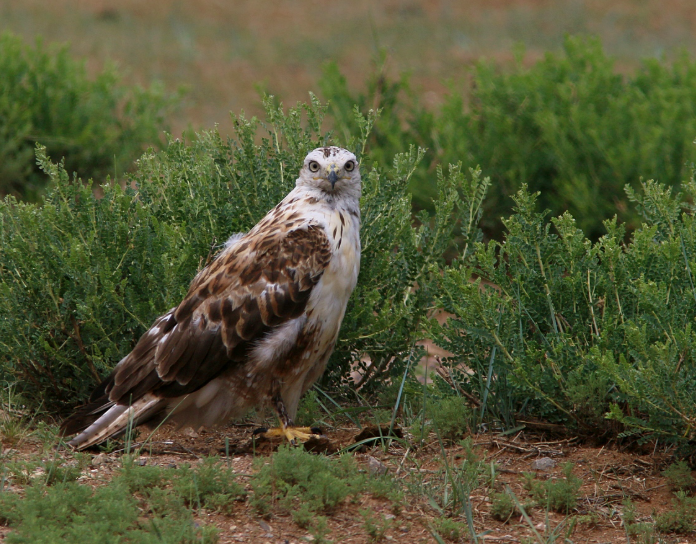
It is the moment the turquoise jewel meets the russet hunter. It is the interaction between the European Roller (Coracias garrulus) and the Common Kestrel (Falco tinnunculus).
For the serious bird photographer, securing a static portrait of either species is a mandatory achievement. A male Kestrel perched on a weathered post, his slate-grey head contrasting with his chestnut back, is a classic study in raptor elegance. A Roller, looking like a refugee from a tropical rainforest with its azure and rufous plumage, is perhaps the most sought-after "exotic" target in the Western Palearctic.
But the true photographic Holy Grail—the shot that defines a portfolio—is capturing the dynamic, often antagonistic interaction between these two masters of the air.
This is not a rare, accidental occurrence. In the prime habitats of the Pannonian Basin and Eastern Europe, their lives are inextricably linked by competition for resources. Understanding this ecological rivalry is the key to moving beyond mere portraiture and capturing behavioral imagery that tells a powerful story.
This guide is a deep dive into the biology of this conflict, the fieldcraft required to witness it, and the technical skills needed to freeze the chaotic beauty of a Roller and Kestrel at odds.
The Protagonists: A Study in Contrast
To photograph the interaction, one must first understand the players. They share a habitat, but their strategies for survival—and their photographic appeal—are vastly different.
The "Flying Gemstone": European Roller
For many visiting photographers from Western Europe, the Roller is the primary target. Having suffered catastrophic declines in the western part of its range, healthy populations are now largely restricted to the east.
-
The Aesthetic: The Roller is improbable. In flat light, it can appear dusky and brownish. But when the sun catches it, it explodes into shades of turquoise, cyan, deep azure, and warm chestnut brown. In flight, the brilliant blue leading edge of the wing is startling.
-
The Behavior: Rollers are "sit-and-wait" predators. They require prominent perches—dead trees, utility wires, or isolated bushes—from which to scan the ground for large insects, lizards, and small rodents. They are territorial about these vantage points. Their flight is powerful, direct, and deceptively fast, often punctuated by the rolling, tumbling display flights that give them their name.
The Russet Hunter: Common Kestrel
Often overlooked because of its familiarity, the Kestrel is astonishingly beautiful when viewed through a high-quality lens.
-
The Aesthetic: A mature male is a stunning bird. The contrast between the blue-grey head and tail against the heavily spotted, rich rusty-red back is superb. Females are a warmer, more uniform brown with intricate barring.
-
The Behavior: While famous for their hovering, Kestrels also use perch-hunting techniques, putting them in direct competition with Rollers. They are falcons, masters of agility. Their flight is sharper, faster, and more maneuverable than the Roller's broader-winged power.
The Ecology of Conflict: Why They Fight
Why do these two species, which don't predate on each other, interact so frequently and aggressively? The answer lies in two critical resources: Real Estate and Vantage Points.
This ecological friction is the photographer's greatest asset. By identifying the contested resources, you can predict where the action will happen.
1. The Battle for the Cavity
This is the primary flashpoint. Both Rollers and Kestrels are secondary cavity nesters. Neither species builds its own nest.
-
They rely on old holes excavated by Black Woodpeckers or Green Woodpeckers, or on natural hollows in mature trees.
-
In the open steppe, suitable trees are scarce. A single, well-positioned old oak with a good hollow is prime real estate.
-
The Interaction: In spring (late April to early June), the competition is fierce. A Kestrel pair may have claimed a hole, only to be harassed by arriving Rollers looking to usurp them. Conversely, a Roller pair may spend their days aggressively driving off curious Kestrels exploring their chosen tree. This provides the most dramatic aerial dogfights, as the birds dive-bomb each other around the nesting trunk.
2. The War for the Perch
The steppe is flat. Height is an advantage. A single dead branch that offers a 360-degree view of the hunting ground is a valuable asset.
-
The Interaction: A Roller sitting on a prime perch will not tolerate a Kestrel landing nearby. The interaction is often a high-speed "displacement." The Kestrel swoops in, and the Roller launches to meet it in mid-air, flashing its turquoise wings in an aggressive display to drive the falcon away. These moments are fleeting, lasting perhaps three seconds, but they are visually spectacular.
The Arena: Fieldcraft and Hides
You cannot stalk this interaction. Both species have phenomenal eyesight and are wary of humans on foot in open terrain. Trying to walk up to a contested tree will simply cause both birds to leave.
Success requires invisibility and patience.
The Role of the Professional Hide
The gold standard for capturing these moments is the use of purpose-built photographic hides situated in prime habitat. In regions like Hungary's Kiskunság or Hortobágy National Parks, specialized hides are often positioned near known nesting trees or established perches.
-
The Advantage: Hides allow you to be in position before dawn. The birds see the hide as part of the landscape. This proximity—often 15 to 25 meters—is impossible to achieve otherwise.
-
One-Way Glass: Modern hides utilize specialized one-way mirror glass. This is crucial for interacting species. The movement of a lens barrel tracking a fast-flying Kestrel would instantly spook a Roller. The glass hides your movements completely, allowing you to track the chaos without disturbing it.
Reading the Landscape
If you are working without a fixed hide, you must read the terrain.
-
Find the "Hub Tree": Look for isolated, mature trees in open grasslands, especially those showing signs of woodpecker activity.
-
Watch the Wires: In agricultural areas, Rollers love power lines. Watch for a Kestrel landing on a pylon near a Roller. The Roller’s posture will change instantly—sleeking its feathers and raising its head. This is your two-second warning that action is imminent.
Technical Execution: Capturing Chaos
When a Kestrel dives at a Roller, the combined relative speed is enormous. The action is erratic and vertical. Standard "bird on a stick" settings will fail.
Shutter Speed is King
You are trying to freeze two fast-moving birds, often moving in opposite directions.
-
Minimum: 1/2500th of a second.
-
Ideal: 1/3200th or 1/4000th.
-
Do not be afraid to push your ISO. A noisy, sharp image of an epic interaction is infinitely better than a clean, blurry one. Modern noise reduction software can handle ISO 3200 or 6400 easily.
Autofocus Strategy
The challenge is that the camera wants to lock onto the background (the sky or distant trees) as the birds move erratically.
-
Zone AF / Group AF: Do not use a single point. Use a cluster of AF points (e.g., a 9-point or 25-point zone). This gives the camera a larger target area to acquire focus on the tangled shapes of the fighting birds.
-
Tracking Sensitivity: Set your camera’s AF tracking sensitivity to be "responsive" or "fast" (e.g., Canon Case 1 or Nikon set to 'Quick'). You want the focus to instantly jump to the new subject (the incoming Kestrel) rather than stick to the original subject (the perched Roller).
-
Back-Button Focus: This is essential. It separates focusing from shutter release. You can keep your thumb held down to continuously track the incoming Kestrel, then hammer the shutter button the moment the two birds intersect, without the camera trying to refocus at the critical split second.
Compositional Choices
-
Give Them Room: The most common mistake is being too tight. If you are framing a tight portrait of the Roller, and the Kestrel enters the frame, you will clip wings. Pull back. Leave 30-40% of the frame empty around the subject to allow for sudden movement. You can crop later; you cannot add wings back in.
-
The Story-Telling Shot: The best interaction shot isn't necessarily the sharpest. It's the one that conveys the relationship. Look for the moment the Kestrel throws its talons forward, or the moment the Roller flares its wings into a giant turquoise shield to intimidate the falcon.
The Ethical Imperative
When targeting high-value species during sensitive periods (nesting), ethics are paramount. The welfare of the birds always trumps the shot.
-
Distance: Even in a hide, maintain respectful distances from active nest holes.
-
No Baiting Near Nests: While some photographers use bait to attract raptors, doing so near an active Roller/Kestrel nesting tree artificially increases conflict and draws in other predators. We strongly advise against it. The natural territorial interactions are frequent enough without artificial stimulation.
-
Know When to Stop: If you witness prolonged, highly aggressive combat where one bird appears distressed or injured, back off.
Conclusion: The Privilege of Witnessing
There is a unique adrenaline rush when you are sitting in a silent hide, the only sound the hum of insects in the summer heat, and suddenly the viewfinder is filled with a collision of russet and azure.
Capturing the interaction between a European Roller and a Common Kestrel is difficult. It requires travel to the right habitat, access to the right locations, and high-speed technical skill. Many frames will be empty sky or blurred wings.
But when it connects—when you freeze that split second of aerial ballet, the Kestrel banking sharply, the Roller screaming its defiance in a flash of electric blue—you have more than a photograph. You have a document of the vibrant, fierce, and beautiful competition that drives the ecology of the European steppe. It is a trophy well worth the patience.

 Miért fontos ma az ügyfélszolgálat átalakítása?
 Van egy alapvető ellentmondás, ami mára az MI-tanácsadás egész piacát feszíti. A cégek tudják, hogy az MI a túlélés záloga, de a hagyományos stratégiaalkotás még mindig a lassú, nehézkes, 6 hónapos maratonra épül. A legtöbb vezető kénytelen beletörődni a ténybe, hogy a stratégiai mélység egyenlő az idővel és a vastag riportokkal.

 A 21. századi digitális marketing világa egy féktelen, pörgős, folyamatosan változó forgószínpad. A Facebook dominanciáját, az Instagram vizuális forradalmát mára egyértelműen beárnyékolta egy új, megállíthatatlan erő: a TikTok. Ez a platform nem csupán egy újabb "app" a telefonunkon; alapjaiban változtatta meg a tartalomfogyasztási szokásainkat, és ezzel együtt a közösségi média marketing teljes játékszabályát.